
This series is a project in which Hagiwara (who runs with him in #WednesdayBudouzakaRen) listens to the stories of two people who have created milestone items (founder Nishioka) and used them (mid-career hire Yoshida) and delves into them.

Hagiwara (hereinafter H): This time we're looking at the windshell "Onion Hoody." What windshells have you two been wearing up until now? By the way, I've always had one from a certain P company, and when it got worn out I'd buy a different color, and I'd never be dissatisfied with it.
Nishioka (hereinafter N): The classic one.
Yoshida (hereinafter Y): I've tried a variety of them, but some were too big and not suitable for running, and I also tried a half-zip pull-over type that was designed to be lightweight.
H: As the name suggests, a windshell is a thin outer layer that protects against the wind and keeps you warm. I think it would be best to use it for mountain running.
・Long trail test
N: When I was making the windshell, I tried out a lot of different things, and even though the silhouette was good, I found that when I sweated, the fabric would stick to my skin and be uncomfortable. So, I started by searching for a good fabric. If it's too thin in the pursuit of lightness, it becomes brittle and weak. The threads are thin and can tear or rip with wear, so it was important to select a fabric that was just right. I think it was easier to move forward because I found a fabric that I thought was "the one" from the start.

Y: I took the first sample of the fabric and went to the Shinetsu Trail (a long trail that runs along the border between Nagano and Niigata prefectures) to test it out. I went all the way to Mount Amakazari, so I guess it was about 200 kilometers.
H: How many days will it take? Over the holidays?
Y: It was for six days and five nights. I quit my job and went there (laughs). It was the beginning of October, and there was unseasonable snow, heavy rain, and all sorts of weather, so it was great for human experimentation (laughs). Even when it got wet, it didn't stick to my body and I said when I got back, "I think this fabric is great."

N: The back has a textured surface, and it's a fabric that "feels good against the skin," but you can't really know that until you try it out, not just try it on. I think it was a big help that I came across this fabric. The silhouette and gimmick came about afterwards.

Y: When Nishioka-san asked me for advice on the wind shell, the first thing I said was that he wanted it to have a double zipper. I think runners will understand.

H: To let the heat out, you want to open it from the bottom, not the top.
Y: I've had it on since the first sample, and it worked as expected in the harsh environment of the Shinetsu Trail. It was extremely useful as it allowed me to subtly regulate my body temperature without having to take it off.
H: Has it only recently that companies have started doing this?
Y: They've been around for a long time for bulky shells designed for snowy mountains, but I think they've only recently started to be used for ultra-lightweight wind shells. When it comes to trail running, you don't want to stop, and you want to regulate your body temperature while you run.
What to add and what to subtract
N: We did some testing and decided on the fabric, and when we were thinking about how to differentiate ourselves, we decided on an asymmetrical zipper. One reason was that it wouldn't touch the chin, but we also wanted to include an element that would make it obvious at a glance that it was from that shop.

H: Is there one that doesn't bite into your beard?
N.Y.: That's true (laughs).
N: I think thumb holes are necessary. Also, ventilation on the sides and back is necessary to protect against the cold and heat.
Y: After that, when the sample came out and we tested it at the Wednesday Budouzaka practice, Mr. N said, "I want to wear it over my backpack, but I can't wear it like this," so we just made the width wider. I think the width is wider in relation to the length than a regular wind shell. That's because the size was set so that you could wear a backpack, so the sides are loose. We adjusted that aspect.
H: Is the watch window the last one?
N: The watch window was really good, but it was also a suggestion from M-senpai. I was thinking about adding a little more twist to it, and when I was using Budouzaka, he said, "Wouldn't it be good if you could see the clock?"

Y: It's a gimmick that already exists in gloves and the like, so I thought it might be physically possible.
N: Yoshi (Yoshida) is left-handed, so I thought I'd put it on both hands. It's suitable for both right-handed and left-handed people.

H: You didn't add pockets, did you?
N: I wondered if a wind shell needed a pocket. In the end, I decided to keep it simple and left it out.
H: You can't put your smartphone in there either because it's heavy.
N: That's right, please put your smartphone in the back pocket of your Natty Shorts.

N: Wind shells are something you put on and take off depending on the situation.
Y: And then you made the zipper pulls. (laughs)
N: It's really detailed. We even made a mold for these parts.

Y: It was before I joined the company, but I was pretty scared when I saw it (laughs).
N: Anyone who sees it will understand.
Y: It's not just for looks, but also for functionality, as it has rubber parts that make it easy to pull up and down even when wearing gloves.
・The secret of color names
N: There are three colors: black, white, and green, but I think green is the most popular.

H: Did you decide on a green color scheme?
N: I guess it's my favorite color (laughs). I wanted black and green, so I thought white would be a bold choice, and it was the color I wanted to try. I think the white with a hint of gray turned out well.

Y: You mixed all three colors together to create an original color just for this.
N: Right. It was worth it. I always struggle to come up with names for colors, but we discussed it again while driving. I learned that there is a traditional green used in British cars, which comes from the forests of England. That's where British Green comes from.

Y: The white is polar white, reminiscent of the polar regions.

N: Solid black is a really strong black. Do you understand? (laughs)

H: I don't really know (laughs).
N: The color names are an issue we'll have to deal with in the future. If we use the same name, some products will end up being shipped incorrectly.
Y: (laughs)
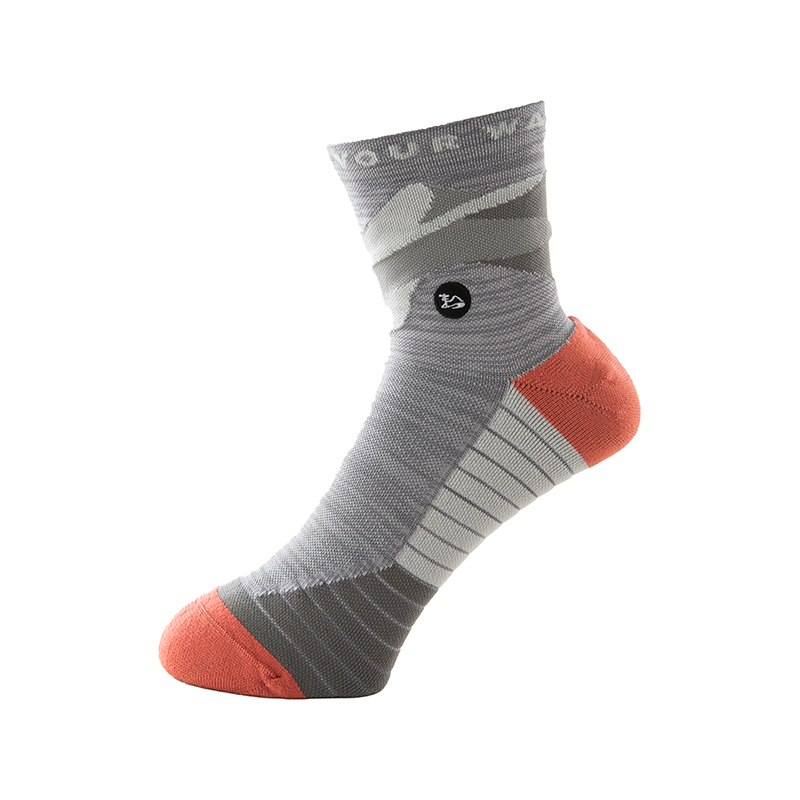
N: For example, we recently released a T-shirt in "ash gray," but we also have socks in "ash gray." It's hard to imagine, but some people get them confused. Even though the product numbers and prices are completely different. Some people ship products based on the color alone, so we thought we'd change the names of the colors to prevent confusion.
H: Is this a precaution against unexpected shipping mistakes?! (laughs)
N.Y.: (laughs)
Y: Also, the fact that there are two olives on the hat is dangerous (laughs).
N: I may say this every time, but I want to cherish the image of the colors.
Y: Nishioka-san calls the products "this child." I think he does it unconsciously.
We care about each and every product, so we like to give them names.
H: That's exactly what I named it.
N: I guess it just happens naturally.
Y: Onion Hoodie becomes cute if you call him "Onion, Onion." I mentioned this last time, but Nishioka-san wasn't keen on the name Onion at first.
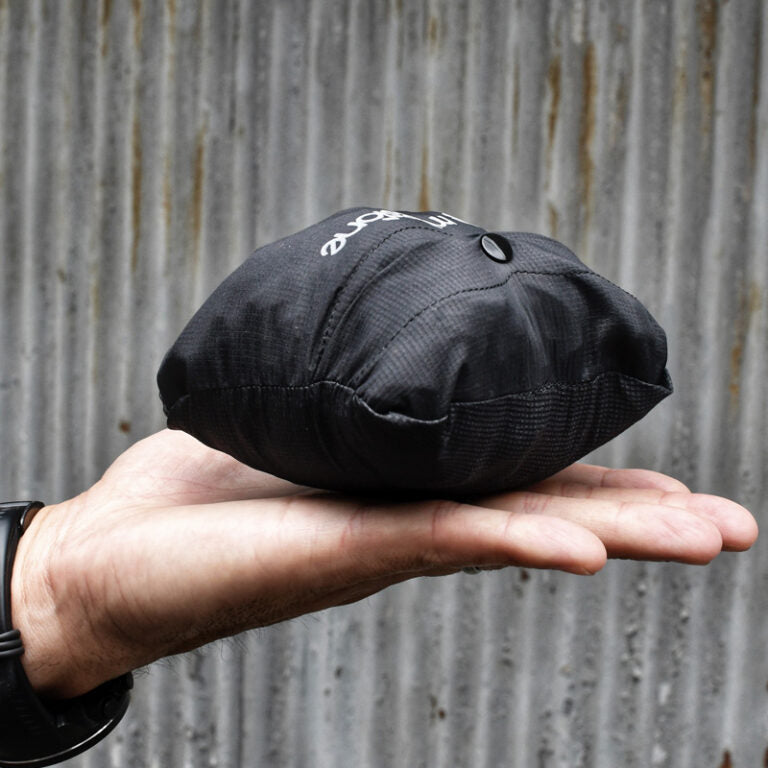
N: Once I learned the meaning and message of the song "The Onion Song," I started to like it more and more. It's packable and the size of an onion. I'm glad it wasn't "Master Blaster Hoodie" (laughs).
H: What's that? (laughs)
Y : (laughs) It's a Stevie Wonder song. It was one of many that I considered.
Continued in Part 2
Episode 3: Tell Me! Milestone "What Is Nutty?" (Part 2)
4th Tell Me! Milestone "Is the World an Onion?" Part 2